Temperate Forests
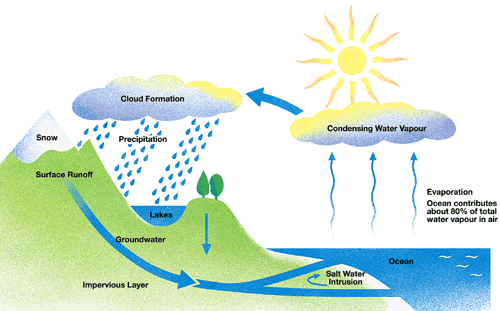
Water Cycle
step 1 - evaporation
It is a process where water at the surface turns into water vapours.
step 2 - condensation
As the water vaporises into water vapour, it rises up in the atmosphere. At the high altitudes the water vapours changes into very tiny particles of ice/water droplets because the temperature at high altitude is low.
Step 3 - sublimation
Sublimation also contributes to water vapours in the air. It is a process where ice directly converts into water vapours without converting into liquid water. This phenomenon accelerates when the temperature is low or pressure is high.
Step 4 - precipitation
The clouds then pour down as precipitation due to wind or temperature change. This occurs because the water droplets combine to make bigger droplets. At high altitudes the temperature is low and hence the droplets lose their heat energy. These water droplets fall down as rain.
step 5 - transpiration
As water precipitates, some of it is absorbed by the soil. This water enters into the process of transpiration. This is the process similar to evaporation where liquid water is turned into water vapour by the plants. The roots for the plants absorb the water and push it toward leaves where it is used for photosynthesis.
step 6 - runoff
As the water pours down, it leads to runoff. Runoff is the process where water runs over the surface of earth. When the snow melts into water it also leads to runoff. As water runs over the ground it displaces the top soil with it and moves the minerals along with the stream.
step 7 - infiltration
Some of the water that precipitates does not runoff into the rivers and is absorbed by the plants or gets evaporated. It moves deep into the soil. This is called infiltration. The water seeps down and increases the level of ground water table. It is called pure water and is drinkable. The infiltration is measured as inches of water-soaked by the soil per hour.